Acing Every Practice Test and Still Failing the Real One: The Hidden Cost of Mock Test Comfort
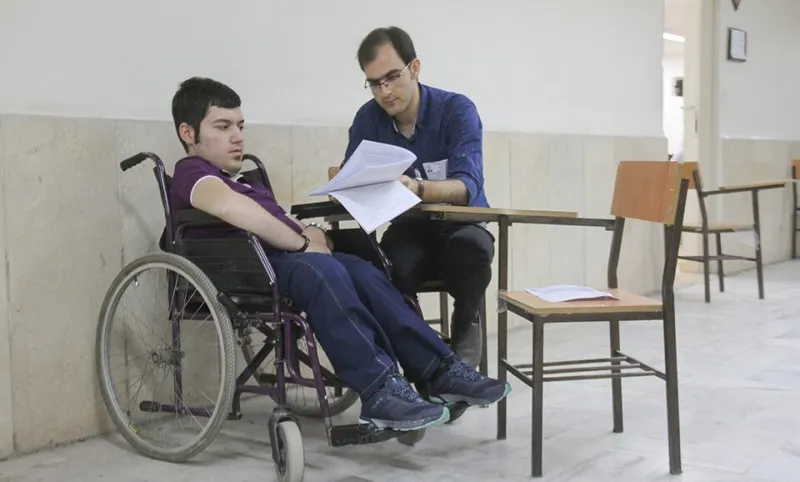
Photo: Esmaeel Baratvand, CC BY 4.0, via Wikimedia Commons
The Score That Feels Like a Promise
There is a particular kind of satisfaction that comes from watching your IELTS practice scores climb. You started somewhere in the 5.5 range, put in the hours, and now you are consistently landing at 7.0 or above on mock tests you run from your apartment in Chicago or your dorm room in Austin. The trajectory looks right. The numbers say you are ready.
But here is the question worth sitting with honestly: are you performing well, or are you simply performing comfortably?
Those are not the same thing, and the gap between them is precisely where test day surprises live.
Why the Brain Rewards Familiarity, Not Competence
Cognitive science has a name for what happens when repeated exposure to a task creates the feeling of mastery: the fluency illusion. When something feels easy, the brain interprets that ease as evidence of deep understanding. In reality, the ease often reflects nothing more than familiarity with the format, the timing, and the low emotional stakes of the environment.
For IELTS candidates, this plays out in a very specific way. You have taken the same style of Reading passage a dozen times. You know roughly how long Task 1 takes you. You have answered enough Speaking Part 2 prompts that you have unconscious templates ready to deploy. None of that is useless — but all of it is optimized for your conditions, not for the test center's.
When you sit down in an official Prometric or British Council testing location, surrounded by strangers, under a clock you cannot pause, with a Speaking examiner you have never met, your brain is no longer operating in familiar territory. And familiar territory, it turns out, was doing a lot of the heavy lifting.
The Specific Ways Low-Stakes Practice Inflates Your Score
It is worth being precise about the mechanisms here, because vague warnings about "test anxiety" are easy to dismiss. The following are concrete ways that a comfortable practice environment artificially elevates your performance.
You control the conditions. At home, you probably take practice tests when you feel alert, rested, and focused. You reschedule them when you are tired or distracted. The official exam does not offer that flexibility. If your test is at 8:00 a.m. on a Saturday and you slept poorly, you sit for it anyway.
You can pause and reset. Even candidates who claim they never pause their practice sessions tend to allow themselves small mental resets — a moment to refocus, a quick glance at their phone, a brief stretch. None of that is available during the real exam.
The stakes feel theoretical, not real. This is the most underestimated factor. When you know a practice test score does not count, your nervous system stays calm. Your prefrontal cortex — the part of the brain responsible for complex language processing — operates at full capacity. Under genuine high-stakes pressure, cortisol levels rise, working memory narrows, and the fluent, organized responses you produced at home become noticeably harder to access.
You have implicit familiarity with your own materials. Many candidates inadvertently over-practice with the same question banks, the same Cambridge practice books, the same YouTube mock Speaking prompts. When you have seen similar content before, your performance reflects recognition more than skill.
How to Know Whether You Are Prepared or Just Comfortable
Gurleen often works with students who come to coaching sessions frustrated by a specific pattern: they feel ready, their mock scores suggest they are ready, and yet something keeps them from pulling the trigger on scheduling the actual exam. That hesitation is worth paying attention to. The nervous system sometimes knows what the spreadsheet does not.
Ask yourself the following:
- Have you ever taken a full, timed IELTS mock test in a public location — a library, a university testing room, a quiet coffee shop — where other people are present and you cannot control the ambient environment?
- Have you practiced Speaking with a real person who gives you no advance warning about the topic, rather than selecting a prompt yourself?
- Have you completed a full four-section exam in one sitting without any breaks beyond what the official format allows?
- Have you practiced on a day when you genuinely did not feel like studying?
If the answer to most of those is no, your mock scores are measuring something real — but not the full picture.
Injecting Realistic Pressure Into Your Study Routine
The goal is not to terrorize yourself. Chronic anxiety is not useful for learning. But deliberately introducing manageable stress into your preparation creates what psychologists call desensitization, and it is one of the most effective tools available for closing the gap between practice performance and test-day performance.
Simulate the commute and the waiting. On a practice test day, get up at the time you would need to for the actual exam, travel somewhere (even just drive to a nearby library), and sit down to take the test without the comfort of your home setup. The ritual of going somewhere activates a different mental state.
Use a stranger as your Speaking examiner. This does not require hiring a professional. A family member, a classmate, or even a language exchange partner who asks you Part 1, Part 2, and Part 3 questions without coaching you is infinitely more valuable than recording yourself alone in your bedroom. The presence of an evaluative other changes everything about how you produce language.
Introduce artificial time pressure. Try completing Reading or Writing tasks with five fewer minutes than the official allocation. When you return to the real time limit, it will feel generous rather than tight.
Take a practice test when you are not at your best. Schedule one for a morning after a late night, or during a period when you have other stressors active. This is not about sabotaging yourself — it is about discovering how your skills hold up when conditions are not ideal, because test day will not always be ideal.
The Difference Between Readiness and Repetition
There is nothing wrong with feeling confident about your IELTS preparation. Confidence built on genuine skill is an asset in the exam room. The problem arises when confidence is built on repetition without variation, on high scores achieved under conditions that do not replicate the real test.
Readiness means your skills are portable — that they travel with you into an unfamiliar room, under real pressure, without the safety nets you have built at home. Repetition means you have gotten very good at a specific set of circumstances that may or may not resemble what awaits you.
The work of the final weeks before your exam is not simply to keep scoring well. It is to stress-test the scores you already have — to find out whether they hold under conditions that are not designed around your comfort.
If they do, you are ready. If they do not, you have learned something invaluable before it cost you a test registration fee and months of waiting.
That is the kind of honest preparation that IELTS by Gurleen is built around — not just helping you reach the scores you want in practice, but making sure those scores mean exactly what you need them to mean when it counts.