Five Essay Formats, One Clear Loser: Ranking IELTS Writing Task 2 Question Types for American Writers
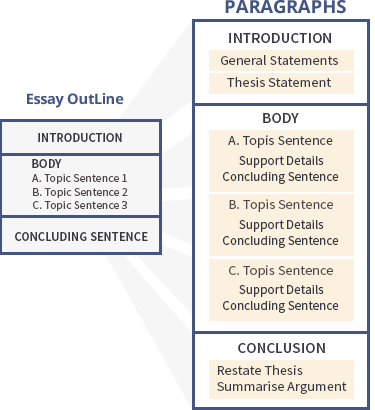
Photo: Azikahkhan, CC BY-SA 4.0, via Wikimedia Commons
Ask a room of American test-takers which Task 2 prompt scares them and you'll hear about "hard topics" — technology, government spending, the environment. But difficulty rarely lives in the topic. It lives in the question format, and one format in particular sits in direct conflict with how most of us were taught to write.
Here are all five Task 2 types, ranked from the most forgiving to the one that quietly sinks more American band scores than any other.
5. The Double Question
*Example: "More people are relocating to cities. Why is this happening? Is urban growth a positive development?"
Two distinct questions, two distinct body sections. The format hands you an outline. The only trap is answering one question thoroughly and the other in a sentence — a Task Response deduction that's entirely avoidable. Give each question its own paragraph with its own idea, and this format practically writes itself.
4. Problem/Solution
*Example: "Traffic congestion is worsening in major cities. What problems does this cause? What measures can reduce it?"
American writers tend to be comfortable here because it mirrors the classic persuasive essay: identify an issue, argue for a fix. The pitfall is vagueness. "Governments should invest in public transport" scores nothing without a mechanism — what kind, funded how, aimed at whom. Specificity is the entire game.
3. Advantage/Disadvantage
*Example: "Remote work is now common. Do the advantages outweigh the disadvantages?"
This format rewards balance, which is actually good news — US writers can handle "on one hand, on the other" structure easily. The trap is the word "outweigh." You must take a position. A perfectly balanced essay with no verdict caps you at a 6 for Task Response. Weigh, then declare.
2. Opinion (Agree/Disagree)
*Example: "Zoos should be banned. To what extent do you agree or disagree?"
This is the format American education prepared you for: thesis, supporting paragraphs, conclusion. Full marks for familiarity. The one adjustment — and it matters — is that "to what extent" invites nuance that a hard five-paragraph thesis sometimes flattens. "I largely agree, with one exception" is a perfectly valid thesis and often a stronger essay.
1. Discussion + Opinion: The Format That Fights Your Training
*Example: "Some believe university education should be free; others think students should pay. Discuss both views and give your own opinion."
Here's the problem. From the five-paragraph essay onward, American writing instruction teaches you to pick a side in paragraph one and spend every subsequent paragraph demolishing the opposition. "Discuss both views fairly, then state your position" runs counter to that instinct in two ways: writers either smuggle their opinion into the discussion paragraphs (destroying the balance the prompt demands) or write two neutral body paragraphs and forget the opinion entirely.
The fix is structural, not stylistic. Body paragraph one: view A, presented fairly. Body paragraph two: view B, presented fairly. Body paragraph three or a developed conclusion: your position, argued with the same persuasive energy you'd bring to any thesis essay. Three moves, clearly separated. Once the structure is internalized, this format stops being a trap and becomes a scoring opportunity — it explicitly tells the examiner what to look for.
A 90-Second Self-Quiz
Answer honestly:
- Given a discussion prompt, do you state your opinion in the introduction? (If yes, that's your weak format.)
- Do you ever finish an essay unsure whether you answered every part of the question? (Weak spot: double question.)
- Do your solutions paragraphs contain words like "should" more often than words like "by" or "through"? (Weak spot: problem/solution.)
- Have you ever written an advantage/disadvantage essay with no final verdict? (Weak spot: outweigh questions.)
Whatever number you answered "yes" to, that's the format to drill next. Write one essay per week in your weakest format — not your favorite one — and the ranking above will stop mattering by test day.