Unlearning the Rules: How American Grammar Education Sets IELTS Writers Up to Fail
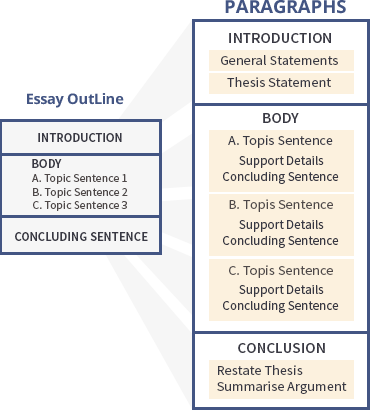
Photo: Azikahkhan, CC BY-SA 4.0, via Wikimedia Commons
The Problem Isn't That You Don't Know Grammar
If you went through the American public school system, you almost certainly spent years learning grammar rules. You memorized the five-paragraph essay structure. You were told never to begin a sentence with "And" or "But." You learned to avoid the passive voice, keep paragraphs symmetrical, and always include a thesis statement in your introduction. You may have even lost points on papers for violating these conventions.
Here is the uncomfortable truth: many of those habits will quietly work against you on the IELTS.
This is not a criticism of American education. Prescriptive grammar instruction serves a purpose — it establishes a shared baseline and teaches students to write with discipline. But IELTS Writing, particularly Task 2, operates on an entirely different set of priorities. When American test-takers carry their high school grammar instincts into the exam room, they often produce writing that is technically tidy but fundamentally misaligned with what examiners are looking for.
What the Five-Paragraph Essay Gets Wrong
The five-paragraph essay is the backbone of American high school writing instruction. Introduction, three body paragraphs, conclusion — clean, predictable, and easy to grade at scale. It rewards structural compliance above all else.
IELTS Task 2 does not reward structural compliance. It rewards coherent argumentation.
The IELTS Writing band descriptors assess four equally weighted criteria: Task Achievement, Coherence and Cohesion, Lexical Resource, and Grammatical Range and Accuracy. Notice that "follows a five-paragraph format" appears nowhere in that list. What does appear is the expectation that your writing progresses logically, that ideas are developed rather than merely stated, and that your position is clear and consistently maintained.
American students trained on the five-paragraph model often produce essays that have the right number of paragraphs but lack genuine development within them. A body paragraph that opens with a topic sentence, offers one supporting point, and then restates the topic sentence is structurally "correct" by high school standards — but it reads as underdeveloped to an IELTS examiner. The IELTS rewards depth over symmetry.
The Passive Voice Paradox
One of the most common pieces of writing advice American students receive is to avoid the passive voice. Writing teachers across the country mark passive constructions in red ink, urging students toward active, direct sentences. This is reasonable advice for journalistic or persuasive writing in many American contexts.
IELTS Task 1, however, frequently demands the passive voice. When you are describing a process diagram — explaining how aluminum is recycled, or how water is purified — passive constructions are not just acceptable, they are often the most accurate and natural choice. "The materials are sorted and processed" is cleaner and more precise than forcing an active agent into a sentence where none logically exists.
Beyond Task 1, the IELTS Grammatical Range and Accuracy criterion explicitly rewards variety. Examiners want to see that you can deploy a range of structures — including passive constructions, complex clauses, conditional sentences, and nominalization — with accuracy and purpose. A writer who reflexively avoids the passive voice out of habit is actually limiting their demonstrated grammatical range.
Cohesion Is Not the Same as Transition Words
Another deeply ingrained American writing habit involves the heavy use of transition words: "Furthermore," "In addition," "However," "Therefore." Students are often taught to open each paragraph or sentence with these connectors as a way of signaling organization.
IELTS examiners notice when transition words are used mechanically rather than meaningfully. The Coherence and Cohesion descriptor penalizes "overuse of cohesive devices" just as it penalizes their absence. If every sentence in your essay begins with a connector, your writing starts to feel formulaic rather than fluent.
True cohesion comes from the logical relationship between ideas — from the way one sentence builds on the previous one, from pronoun reference, from the repetition and variation of key concepts. These are subtler skills than memorizing a list of transition phrases, and they require genuine engagement with your own argument rather than a mechanical assembly of pre-learned parts.
Accuracy Is Only One-Quarter of Your Score
Perhaps the most significant mindset shift American test-takers need to make is this: grammatical accuracy, while important, accounts for only 25 percent of your IELTS Writing band score. The student who writes a technically flawless but underdeveloped essay will not outscore the student who writes with some minor errors but demonstrates strong argumentation, rich vocabulary, and genuine coherence.
This does not mean accuracy is irrelevant. Consistent errors in subject-verb agreement, article usage, or sentence structure will limit your Grammatical Range and Accuracy score. But obsessing over grammar at the expense of argument development, vocabulary range, or logical flow is a trade-off that consistently costs American test-takers band points they cannot afford to lose.
A More Useful Framework for IELTS Writing
Rather than asking "Is this grammatically correct?" before every sentence, train yourself to ask a different set of questions:
- Does this paragraph develop a single, clear idea fully?
- Does my argument progress logically from one paragraph to the next?
- Am I using a variety of sentence structures, or am I defaulting to the same patterns?
- Is my vocabulary precise and varied, or am I repeating the same words?
- Does my conclusion reflect the argument I actually made, rather than simply restating the introduction?
These questions orient you toward what IELTS examiners are genuinely evaluating. They push you away from rule-compliance and toward the kind of analytical, flexible writing that earns scores in the 7.0 and above range.
Moving Forward
Unlearning deeply ingrained habits is harder than learning new ones. If you have spent years writing in a particular way and been rewarded for it, shifting your approach requires deliberate, consistent practice — not just reading about the differences.
At IELTS by Gurleen, the writing coaching program is built around exactly this kind of targeted unlearning. Practice essays are evaluated against the actual IELTS band descriptors, with feedback designed to help you identify which of your existing writing habits are serving you and which ones are holding your score back. The goal is not to make you a worse writer — it is to make you the right kind of writer for this particular exam.